

What is the Cutting Speed of a CNC Water Jet Cutter?
As a supplier of CNC water jet cutters, I've been frequently asked about the cutting speed of these remarkable machines. Understanding the cutting speed is crucial for businesses looking to optimize their production processes and make informed decisions when investing in a water jet cutting system. In this blog post, I'll delve into the factors that influence the cutting speed of a CNC water jet cutter and provide insights to help you better understand this important aspect of water jet cutting technology.
How Does a CNC Water Jet Cutter Work?
Before we discuss the cutting speed, let's briefly review how a CNC water jet cutter operates. A CNC (Computer Numerical Control) water jet cutter uses a high-pressure stream of water, often mixed with an abrasive material, to cut through various materials. The water is pressurized to extremely high levels, typically between 30,000 and 90,000 pounds per square inch (psi), and forced through a small nozzle. When the high-pressure water stream hits the material, it erodes the material, creating a cut. The addition of an abrasive, such as garnet, enhances the cutting ability and allows the water jet cutter to cut through harder materials.
Factors Affecting Cutting Speed
The cutting speed of a CNC water jet cutter is influenced by several factors, including the material being cut, the thickness of the material, the type of abrasive used, the pressure of the water jet, and the nozzle size. Let's take a closer look at each of these factors:
- Material Type: Different materials have different hardness, density, and composition, which can significantly affect the cutting speed. For example, softer materials like rubber, foam, and wood can be cut much faster than harder materials like steel, titanium, and granite. The cutting speed for softer materials can range from several inches per minute to over a foot per minute, while the cutting speed for harder materials may be only a few inches per minute.
- Material Thickness: The thickness of the material also plays a crucial role in determining the cutting speed. Generally, the thicker the material, the slower the cutting speed. This is because the water jet needs more time to penetrate through the material and remove the excess material. For example, a 1/8-inch thick piece of aluminum can be cut much faster than a 1-inch thick piece of aluminum.
- Abrasive Type and Size: The type and size of the abrasive used can also affect the cutting speed. Different abrasives have different hardness and cutting properties, which can impact the efficiency of the cutting process. Garnet is the most commonly used abrasive in water jet cutting because it is relatively inexpensive, readily available, and has good cutting performance. The size of the abrasive particles also matters, as smaller particles can provide a smoother cut but may reduce the cutting speed, while larger particles can increase the cutting speed but may result in a rougher cut.
- Water Jet Pressure: The pressure of the water jet is another important factor that affects the cutting speed. Higher water jet pressures generally result in faster cutting speeds because the high-pressure water stream can penetrate through the material more quickly and remove the excess material more efficiently. However, increasing the water jet pressure also increases the wear and tear on the nozzle and other components of the water jet cutter, which can lead to higher maintenance costs.
- Nozzle Size: The size of the nozzle used in the water jet cutter can also impact the cutting speed. Smaller nozzles can produce a more concentrated water jet, which can result in a faster cutting speed and a finer cut. However, smaller nozzles also have a lower flow rate, which means they may not be able to remove the excess material as quickly as larger nozzles. Larger nozzles, on the other hand, can produce a wider water jet, which can increase the cutting speed but may result in a coarser cut.
Typical Cutting Speeds for Different Materials
To give you a better idea of the cutting speeds for different materials, here are some typical cutting speeds for a CNC water jet cutter using a 60,000 psi water jet pressure and a 0.040-inch diameter nozzle:
- Aluminum: 1/8-inch thick aluminum can be cut at a speed of approximately 10 to 15 inches per minute, while 1-inch thick aluminum can be cut at a speed of approximately 2 to 3 inches per minute.
- Steel: 1/4-inch thick steel can be cut at a speed of approximately 5 to 8 inches per minute, while 1-inch thick steel can be cut at a speed of approximately 1 to 2 inches per minute.
- Stainless Steel: 1/4-inch thick stainless steel can be cut at a speed of approximately 4 to 6 inches per minute, while 1-inch thick stainless steel can be cut at a speed of approximately 0.5 to 1 inch per minute.
- Titanium: 1/8-inch thick titanium can be cut at a speed of approximately 3 to 5 inches per minute, while 1/4-inch thick titanium can be cut at a speed of approximately 1 to 2 inches per minute.
- Granite: 1/2-inch thick granite can be cut at a speed of approximately 1 to 2 inches per minute, while 1-inch thick granite can be cut at a speed of approximately 0.5 to 1 inch per minute.
It's important to note that these are just approximate cutting speeds and the actual cutting speed may vary depending on the specific conditions of the cutting process, such as the type of abrasive used, the water jet pressure, and the nozzle size.
Optimizing Cutting Speed
To optimize the cutting speed of a CNC water jet cutter, it's important to consider all of the factors mentioned above and find the right balance between cutting speed, quality, and cost. Here are some tips to help you optimize the cutting speed:
- Choose the Right Material: Selecting the right material for your application can significantly impact the cutting speed. If possible, choose softer materials that can be cut more quickly.
- Use the Right Abrasive: Choosing the right abrasive and abrasive size can also improve the cutting speed. Experiment with different abrasives and abrasive sizes to find the combination that works best for your specific application.
- Adjust the Water Jet Pressure: Increasing the water jet pressure can increase the cutting speed, but it's important to find the right balance between pressure and wear and tear on the nozzle and other components of the water jet cutter.
- Select the Right Nozzle Size: Choosing the right nozzle size can also affect the cutting speed. Consider the thickness and type of material being cut and select a nozzle size that provides the best balance between cutting speed and quality.
- Optimize the Cutting Parameters: Most CNC water jet cutters come with software that allows you to adjust the cutting parameters, such as the cutting speed, the feed rate, and the number of passes. Experiment with different cutting parameters to find the combination that provides the fastest cutting speed without sacrificing quality.
Conclusion
The cutting speed of a CNC water jet cutter is influenced by several factors, including the material being cut, the thickness of the material, the type of abrasive used, the pressure of the water jet, and the nozzle size. By understanding these factors and optimizing the cutting process, you can achieve faster cutting speeds and improve the efficiency of your production processes.

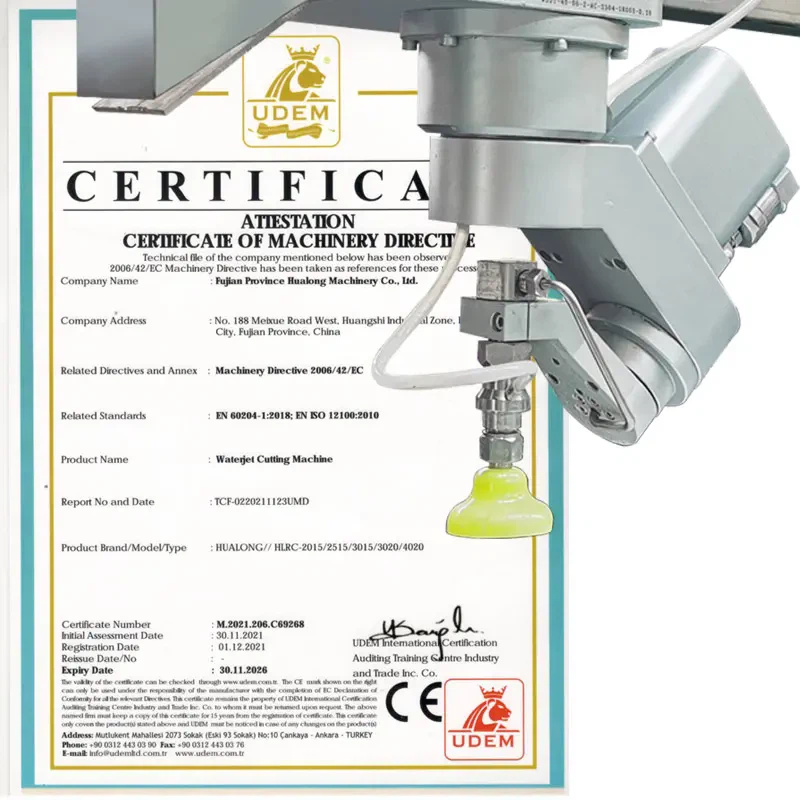
If you're in the market for a water jet cnc machine for sale, we offer a wide range of high-quality CNC water jet cutters that are designed to meet the needs of various industries. Our water jet cutters are equipped with advanced technology and features that allow for precise and efficient cutting, and we offer a variety of options to customize the machine to your specific requirements.
We also offer Stone Water Jet Cutting Machine in russia and 5 Axis Waterjet in United States for customers who need to cut stone or require more complex cutting operations. Our team of experts is available to provide you with technical support and guidance to help you choose the right water jet cutter for your application.
If you're interested in learning more about our CNC water jet cutters or have any questions about cutting speed or other aspects of water jet cutting technology, please don't hesitate to contact us. We'd be happy to discuss your needs and provide you with a free quote.
References
- "Water Jet Cutting Basics." Water Jet Technology Association.
- "CNC Water Jet Cutting: A Comprehensive Guide." Machining Doctor.
- "Factors Affecting Water Jet Cutting Speed." Industrial Metal Supply.